OpenAI ChatGPT Voice Assistant: Bridging Human-AI Interaction Through Voice Technology
Introduction
Voice is becoming the most natural interface for everyday computing. Yet many AI systems still rely on text-heavy interactions that feel unnatural for users who prefer conversational communication.
To solve this, I built an OpenAI ChatGPT Voice Assistant that combines OpenAI language intelligence with Google Cloud speech services for real-time voice-first AI interaction.
The objective was to make human-AI conversations faster, more natural, and more accessible across accents and languages.
Project Overview
This project was designed as a production-capable voice interaction layer that converts spoken input to text, processes the prompt through ChatGPT, and returns speech output with low latency.
It was built to support:
- Natural voice-driven user interaction
- Multi-language and accent-friendly experiences
- Real-time conversational responsiveness
- Scalable and maintainable full-stack deployment
The Core Challenge
Traditional AI interfaces can feel mechanical due to interaction delays and context breaks. The key engineering problems were:
- Translating natural speech into accurate AI-readable prompts
- Preserving response speed while chaining multiple cloud services
- Handling diverse accents, speaking rates, and language styles
- Maintaining fluid conversation flow without disruptive lag
Technical Implementation
Architecture
The solution was built with the MERN stack for flexibility and scale:
- MongoDB for conversation history and usage metadata
- Express.js for API orchestration and middleware routing
- React.js for responsive voice interaction UI
- Node.js for real-time backend processing
This architecture enabled clean service boundaries and efficient request handling across the speech-to-AI-to-speech pipeline.
Key Features
Smart Speech Processing
- Google Cloud Speech-to-Text integration for accurate voice input recognition
- Google Cloud Text-to-Speech for natural spoken responses
- Accent and language adaptation strategies for broader usability
Advanced AI Integration
- Seamless OpenAI ChatGPT integration for conversational understanding
- Custom middleware for efficient API request flow
- Intelligent caching to reduce repeated processing overhead
Performance Optimization
- Latency reduction through response caching and optimized request sequencing
- Efficient data flow between speech and language services
- Error-handling patterns for stable user experience during transient failures
Voice Processing Flow
const processVoiceInput = async (audioInput) => {
  try {
    // Convert speech to text
    const text = await googleCloud.speechToText(audioInput);

    // Process with ChatGPT
    const response = await openai.generateResponse(text);

    // Convert response to speech
    const audioResponse = await googleCloud.textToSpeech(response);

    return audioResponse;
  } catch (error) {
    handleError(error);
  }
};
This middleware flow demonstrates the core orchestration pattern used for real-time voice interactions.
Impact and Results
The platform delivered meaningful technical and user-facing outcomes:
| Area | Outcome |
|---|---|
| Service Integration | Unified OpenAI and Google Cloud speech services in a production workflow |
| Responsiveness | Near real-time conversational response performance |
| Accessibility | Voice-first interface improved usability across user groups |
| Global Usability | Better support for diverse accents and language inputs |
Business Value
This architecture can be applied across multiple high-impact domains:
- Voice-enabled customer support assistants
- Smart home interaction systems
- Accessibility-focused AI tools
- Multilingual virtual assistants for global users
It also provides a reusable foundation for future AI voice products.
Technologies Used
- OpenAI ChatGPT API
- Google Cloud Speech-to-Text and Text-to-Speech
- MongoDB
- Express.js
- React.js
- Node.js
- Custom middleware and caching layers
Skills Demonstrated
- AI service integration and orchestration
- Full-stack application development
- API design for real-time workflows
- Performance optimization for low-latency systems
- Cloud service interoperability
Future Enhancements
Planned roadmap improvements include:
- Smart home device integration
- Multi-modal input and output support
- Enhanced context memory across sessions
- Expanded language and dialect support
- Emotion and intent recognition features
Conclusion
This OpenAI ChatGPT Voice Assistant project demonstrates how well-architected integrations can make AI interaction feel more human and accessible.
By combining reliable speech processing, conversational AI, and scalable backend design, the system delivers a practical voice-first experience with strong potential across consumer and enterprise use cases.
Related Projects
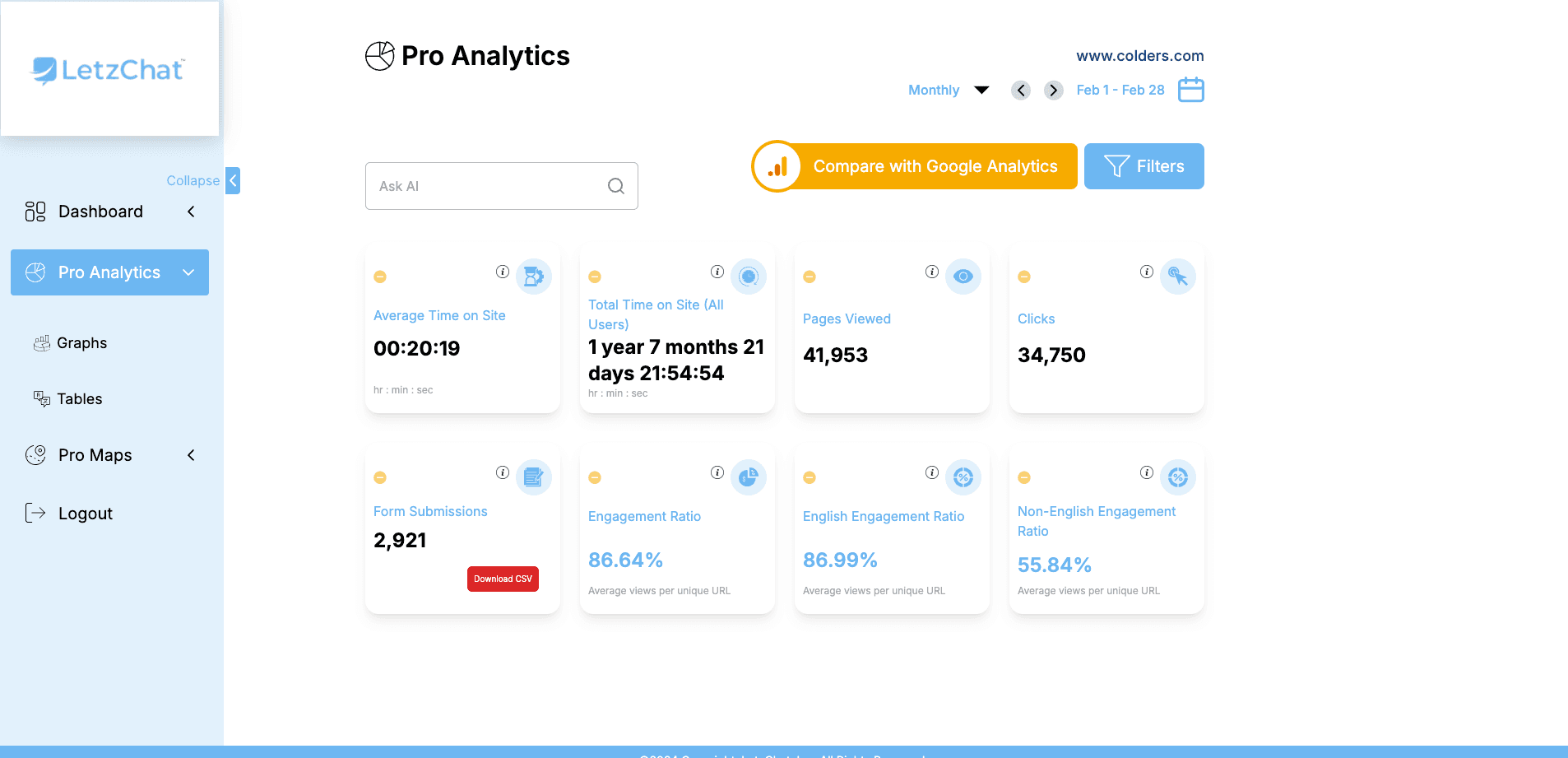
LetzChat – Enterprise Multilingual Translation & Communication Platform
Complete enterprise translation ecosystem — featuring real-time analytics (300M+ events/month), AI-powered chat, voice/video dubbing, live call translation, podcast/Zoom integration, glossary management, subtitle generation, and comprehensive analytics — breaking language barriers across all communication channels.

AI Calling Agent with Admin Dashboard for Doctors
AI-powered healthcare communication platform combining an intelligent voice bot with an admin dashboard for appointment workflows, campaign control, and real-time call analytics.

Levate.ai - AI-Driven Hotel Revenue Optimization Platform
Advanced AI-powered hospitality revenue platform built to maximize hotel profitability through dynamic pricing, smart upselling, and real-time market intelligence.
Related Articles
GenderRecognition.com: AI-Driven Gender Detection for Smarter Insights
Building a state-of-the-art AI platform that provides accurate, scalable, and privacy-compliant gender recognition solutions across multiple industries using deep learning, computer vision, and multi-modal AI.
Future Trends in Software Development
A forward look at the technologies and engineering shifts that are likely to shape the next phase of software development.
Revolutionizing Animal Welfare Management with a Custom MERN Stack Solution
A case study on the Animal Management System (AMS), a MERN and AWS-based platform that improved care scheduling, adoption workflows, and operational efficiency for animal welfare organizations.