Point of Sale (POS) System MVP: Revolutionizing Retail Operations with Simplicity and Functionality
Introduction
Retail operations move fast, and small to medium-sized businesses need software that is practical, reliable, and easy to use. Many existing systems are either too expensive, too complex, or not aligned with day-to-day store workflows.
To address this gap, I developed a Point of Sale (POS) System MVP focused on the core needs of retail teams: sales processing, inventory control, user authentication, and operational reporting.
The goal was to deliver a lightweight but high-value system that improves execution without adding unnecessary complexity.
Project Overview
This MVP was designed for small and mid-sized retailers that need immediate operational improvement with minimal onboarding overhead.
The platform was built with:
- Java for stable, maintainable core logic
- Java Swing for a desktop-first, responsive interface
- SQL for reliable data persistence and reporting
By combining these technologies, the system provides a straightforward and dependable retail management workflow.
The Problem
Many retailers still rely on manual processes or outdated tools, which creates recurring issues:
- Slow and error-prone checkout workflows
- Poor visibility into real-time stock levels
- Limited reporting for business planning
- Access control gaps around sensitive operations
These inefficiencies directly affect customer experience, staff productivity, and margin control.
The Solution
I built the POS MVP to automate critical retail operations while preserving usability for non-technical users.
The solution was intentionally scoped to MVP priorities:
- Fast transaction handling at checkout
- Accurate inventory tracking and updates
- Essential report generation for decision support
- Secure authentication for controlled system access
This approach ensured immediate value and a clear path for future expansion.
Key Features
1. User-Friendly Interface
The Java Swing interface was designed for speed and clarity, reducing training time and enabling store staff to adopt the system quickly.
2. Sales Transaction Management
The checkout module supports:
- Transaction processing
- Discount application
- Tax calculation
- Receipt generation
This creates a consistent and efficient checkout experience.
3. Inventory Management
The inventory module enables:
- Real-time stock tracking
- Product information management
- Reorder visibility for low-stock items
This reduces stockouts and improves replenishment planning.
4. Reporting
The system includes practical reporting capabilities for:
- Sales trends
- Inventory status
- Operational review by store management
These reports support better day-to-day and monthly decision-making.
5. Secure User Authentication
Role-protected access was included to ensure that only authorized users can access critical workflows and business data.
Technical Stack
- Core Language: Java
- Frontend/Desktop UI: Java Swing
- Data Layer: SQL database
This stack was selected for stability, portability, and strong fit for desktop retail environments.
Development Challenges and Approach
The biggest challenge was balancing feature completeness with MVP simplicity.
If the product included too many advanced features early, usability would suffer. If it included too little, operational impact would be limited.
To solve this, I used iterative refinement with user feedback and focused on:
- High-frequency retail workflows first
- Simple UI patterns for faster adoption
- Stable data handling for transactions and inventory
This kept the MVP aligned with practical business needs.
Impact
The POS MVP delivered immediate improvements for retail operations:
- Faster and more reliable sales processing
- Better control over inventory movement
- More informed planning through report visibility
- Improved process discipline through authenticated access
The project also demonstrates end-to-end product ownership, from architecture and UI implementation to workflow design and operational fit.
Why This Project Matters
For small and medium retailers, software needs to be usable on day one and valuable in daily operations. This project focused on that outcome.
It proves that a well-scoped MVP can solve real business problems quickly while creating a foundation for long-term product growth.
Future Roadmap
Planned enhancements include:
- Advanced analytics and dashboarding
- Third-party integrations (payments, accounting, logistics)
- Cloud-enabled access and synchronization
- Multi-store management support
Conclusion
This POS System MVP is a practical example of building software that balances simplicity with functionality.
By focusing on core retail workflows and user-first design, the system improves operational efficiency today and provides a scalable base for future expansion.
Related Projects

Point of Sale (POS) System MVP
Developed a Minimum Viable Product (MVP) for a Point of Sale (POS) system tailored for small to medium-sized retail businesses, featuring transaction processing, inventory management, user authentication, and reporting.
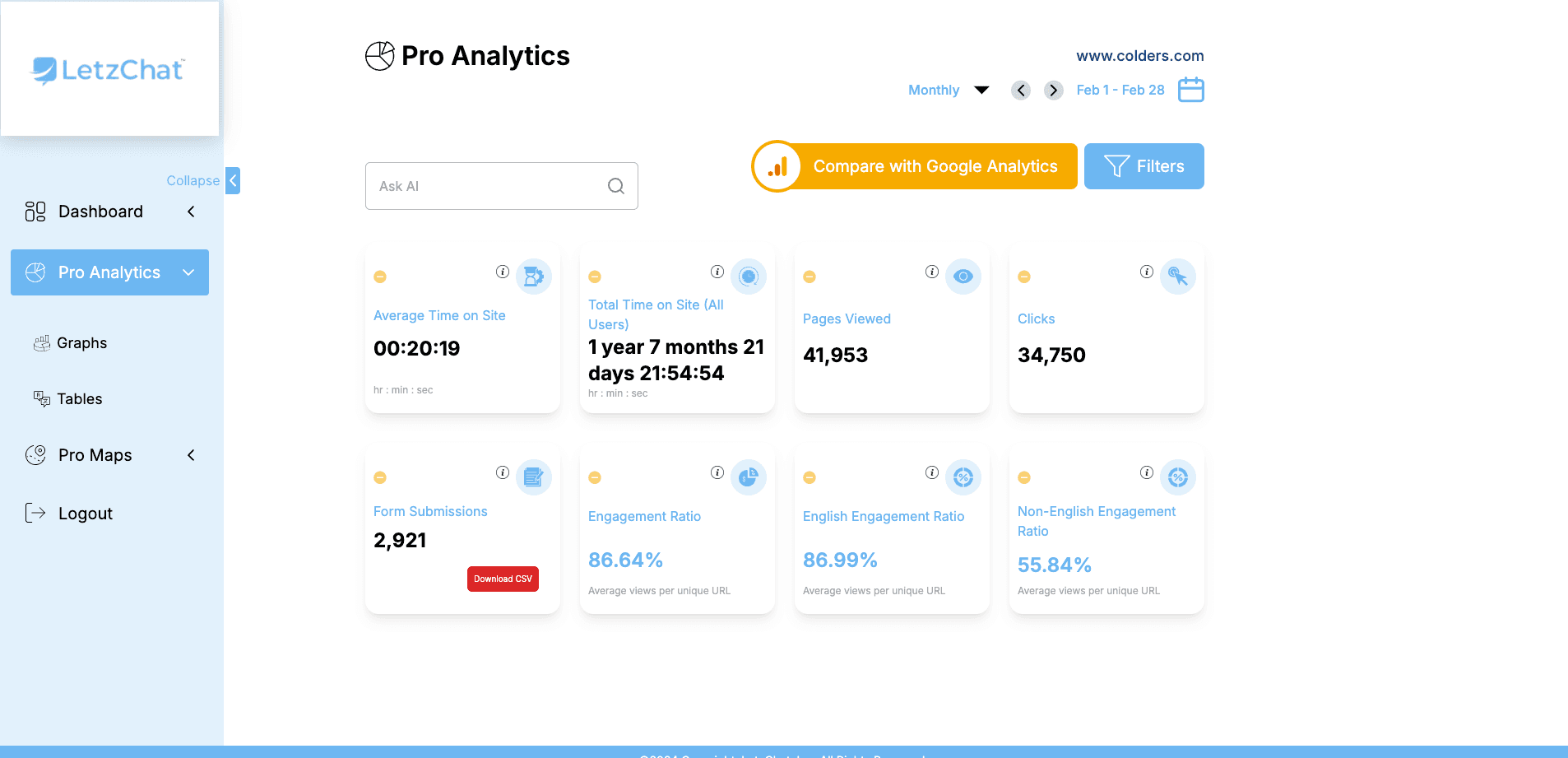
LetzChat – Enterprise Multilingual Translation & Communication Platform
Complete enterprise translation ecosystem — featuring real-time analytics (300M+ events/month), AI-powered chat, voice/video dubbing, live call translation, podcast/Zoom integration, glossary management, subtitle generation, and comprehensive analytics — breaking language barriers across all communication channels.

GenderRecognition.com: AI-Driven Gender Detection Solutions
State-of-the-art AI-powered gender detection platform processing images, videos, text, and voice data in real-time — built with privacy compliance, bias mitigation, and enterprise-level scalability. Includes comprehensive admin panel managing 2,800+ users and 33,000+ API calls.
Related Articles
GPT Translator Chrome Extension: AI-Powered Multilingual Translation
A case study on GPT Translator, a Chrome extension that delivers instant, context-aware translation for text, web pages, and technical files while preserving formatting and workflow speed.
Languages-Details NPM Package: Simplified Language Metadata at Your Fingertips
A case study on Languages-Details, an open-source NPM package that provides fast, structured language metadata for multilingual apps, localization workflows, and AI/NLP systems.
Transforming Business Operations with Custom Inventory and POS Systems: A Success Story with Mr. Home Garage Door
A case study on how a custom MERN-based Inventory Management System and POS platform helped Mr. Home Garage Door improve accuracy, speed, customer service, and operational scalability.